

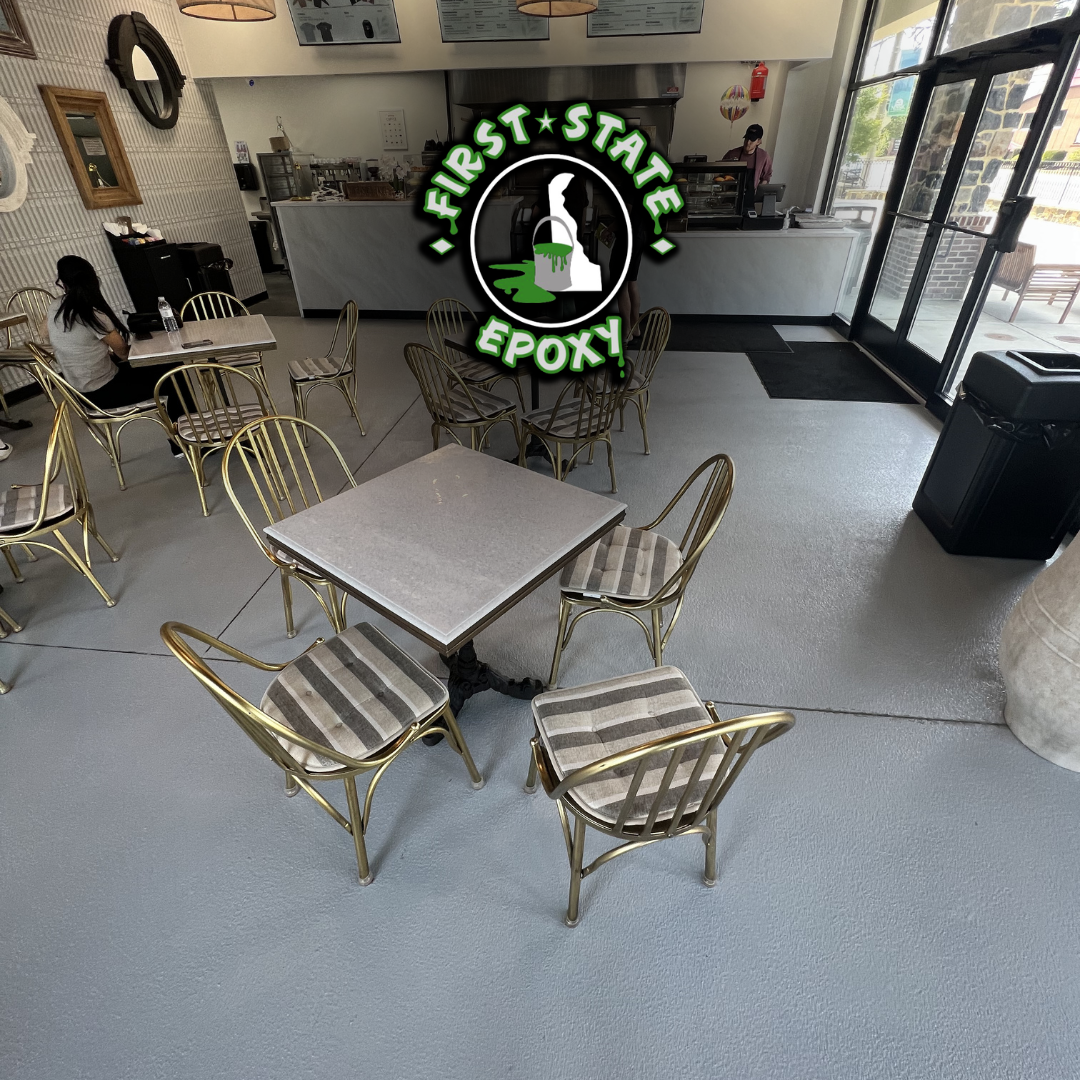
Best Flooring for Restaurants in Delaware: Epoxy, Polished Concrete & More
Choosing flooring for a restaurant isn’t simply an aesthetic decision. Restaurant floors face an unusually demanding combination of foot traffic, spills, grease, moisture, dropped equipment, frequent cleaning and constant movement from employees and customers.
For restaurant owners, developers and facility managers in Delaware, the right flooring system needs to balance durability, cleanability, traction, appearance and long-term maintenance costs. The best flooring for a dining room may also be very different from the right surface for a commercial kitchen, bar, food-preparation area or storage space.
Epoxy flooring and polished concrete are two of the most versatile options available for commercial restaurant environments, but each has different strengths. Understanding those differences can help you choose a flooring system designed around how your restaurant actually operates.
What Should You Look for in Restaurant Flooring?
Before comparing individual flooring systems, it helps to understand what makes restaurant flooring different from flooring in many other commercial buildings.
A restaurant floor may encounter hundreds of customers in a day while employees continuously move between kitchens, dining areas, bars and service stations. Behind the scenes, floors can also be exposed to water, oils, grease, food spills and cleaning products.
Important factors to consider include:
- Durability under continuous foot traffic
- Traction in areas where spills and moisture are common
- Resistance to stains, grease and chemicals
- Ease of routine cleaning
- Moisture resistance
- Appearance and design flexibility
- Existing concrete condition
- Installation requirements and potential downtime
- Long-term maintenance costs
There isn’t one flooring system that’s perfect for every part of every restaurant. A professional flooring contractor should evaluate the environment and recommend a system based on the demands of each space.
Is Epoxy Flooring Good for Restaurants?
Epoxy is one of the most popular commercial concrete flooring solutions because it creates a durable, seamless surface over properly prepared concrete.
Unlike flooring systems with numerous seams or grout lines, a professionally installed epoxy system can create a continuous surface that’s straightforward to maintain.
Commercial epoxy flooring can offer several advantages for restaurants:
- Strong resistance to everyday wear
- Seamless appearance
- Resistance to many oils, spills and chemicals
- Easy-to-clean surface
- Custom colors and finishes
- Slip-resistant additives where additional traction is desired
- Protection for the underlying concrete
These characteristics make epoxy particularly useful in demanding back-of-house environments.
Commercial Kitchens and Food Preparation Areas
Commercial kitchens place tremendous demands on flooring.
Water, grease, oils, food spills, cleaning chemicals and constant employee movement can quickly expose weaknesses in an unsuitable flooring system.
A properly specified commercial epoxy system provides a durable surface designed to handle demanding conditions. Depending on the environment, texture or slip-resistant aggregate can also be incorporated into the flooring system to increase traction.
Surface preparation is especially important in these environments. Professional installation typically involves mechanically preparing the concrete so the coating can properly bond to the substrate.
Bars and Service Areas
Behind-the-bar flooring encounters many of the same challenges as a commercial kitchen: moisture, spills, frequent cleaning and continuous employee traffic.
A seamless resinous flooring system can simplify maintenance while providing the durability necessary for daily restaurant operations.
Storage and Back-of-House Areas
Restaurant storage rooms, walkways and service areas don’t always need decorative flooring, but they still benefit from a durable surface that’s easy to maintain.
Commercial coatings can provide a practical solution without sacrificing a clean, professional appearance.
What About Polished Concrete for Restaurants?
Polished concrete provides a completely different approach.
Rather than applying a thick coating over the slab, concrete polishing mechanically processes the existing concrete to produce a smooth, refined finish.
The result is a modern aesthetic that has become especially popular in restaurants, breweries, cafés, retail environments and other design-focused commercial spaces.
Benefits can include:
- High-end contemporary appearance
- Excellent durability
- Low routine maintenance
- No topical coating to peel
- Increased light reflectivity
- Utilization of the existing concrete slab
- Long service life when properly maintained
Polished concrete is particularly attractive for front-of-house restaurant spaces where appearance and durability are both priorities.
Dining Rooms
Polished concrete can complement industrial, minimalist, contemporary and upscale restaurant designs.
Instead of covering the existing slab, polishing can showcase characteristics of the concrete itself. Variations within the slab can become part of the finished aesthetic, giving each floor a unique appearance.
Cafés and Coffee Shops
Coffee shops often need flooring that looks attractive while tolerating substantial daily foot traffic.
Polished concrete provides a clean commercial appearance without requiring carpet, tile or other traditional flooring materials.
Breweries and Taprooms
The industrial aesthetic of polished concrete also makes it an appealing option for customer-facing brewery and taproom spaces.
However, areas regularly exposed to liquids, production chemicals or significant moisture may require a different flooring system. That’s why evaluating front-of-house and production areas separately is important.
Epoxy vs. Polished Concrete for Restaurant Flooring
Neither option is universally better. The right answer depends on where the flooring will be installed and what it will encounter.
Choose Commercial Epoxy When:
- Moisture and spills are frequent
- Chemical resistance is important
- Additional traction is desired
- A seamless coated surface is preferred
- The underlying concrete needs additional protection
- Custom colors or decorative finishes are important
Choose Polished Concrete When:
- The floor is primarily customer-facing
- A modern or industrial appearance is desired
- Long-term maintenance is a major consideration
- The existing slab is a good candidate for polishing
- High foot traffic is expected
- Natural concrete aesthetics complement the space
For some restaurants, the best solution may actually involve multiple flooring systems within the same facility.
A restaurant could use polished concrete throughout its dining room while using a commercial resinous coating in the kitchen and other demanding back-of-house areas.
What About Tile, Vinyl and Other Restaurant Flooring Options?
Epoxy and polished concrete aren’t the only materials available.
Commercial tile has traditionally been common in restaurant environments and offers significant design flexibility. However, grout lines introduce additional maintenance considerations, and damaged individual tiles may require repair or replacement.
Commercial vinyl products can provide attractive designs and comfort underfoot but may not be appropriate for every high-moisture, high-heat or heavy-duty restaurant environment.
Rubber flooring can offer traction and comfort in specific applications, although its appearance may make it less desirable for customer-facing spaces.
The important question isn’t simply, “What is the best restaurant flooring?”
It’s:
“What flooring system best matches the demands of this particular space?”
Why Surface Preparation Matters for Restaurant Epoxy Flooring
The finished floor is only part of a successful commercial coating installation.
Proper concrete surface preparation is critical to the performance of epoxy and other resinous flooring systems.
Existing contaminants, old coatings, weak concrete and other surface conditions can interfere with adhesion. Professional installers use mechanical preparation methods to create the appropriate concrete profile before applying the flooring system.
Skipping proper preparation can contribute to premature coating failure, peeling or delamination.
For restaurant renovations in particular, evaluating the existing slab before selecting a flooring system can prevent costly surprises later in the project.
Can Restaurant Flooring Be Slip Resistant?
Traction should be an important consideration anywhere restaurant floors may regularly encounter water, oils or other spills.
Commercial coating systems can incorporate slip-resistant aggregates and textured finishes designed to provide additional traction.
However, more texture isn’t always better.
Aggressive texture may provide additional grip but can also affect how easily a floor can be cleaned. The goal is to select an appropriate surface profile based on the specific environment.
A dining room, commercial kitchen and food-preparation area may each benefit from different finishes.
How Long Does Commercial Restaurant Flooring Last?
There isn’t a single lifespan that applies to every commercial floor.
Longevity depends on factors including:
- Flooring system selected
- Quality of surface preparation
- Condition of the concrete
- Amount and type of traffic
- Exposure to moisture and chemicals
- Cleaning practices
- Ongoing maintenance
- Quality of installation
Professional installation and proper system selection are therefore just as important as the flooring material itself.
Choosing the cheapest initial flooring option can sometimes result in higher long-term costs if frequent repairs or replacement become necessary.
Choosing a Restaurant Flooring Contractor in Delaware
Commercial restaurant projects require more planning than simply selecting a color or finish.
Before installation begins, a flooring contractor should understand how the space is used, evaluate the existing concrete and discuss the performance requirements of different areas.
Restaurant owners and project managers should consider:
- Experience with commercial concrete flooring
- Concrete surface preparation methods
- Available epoxy and resinous flooring systems
- Concrete polishing capabilities
- Slip-resistant options
- Project scheduling requirements
- Existing floor and concrete conditions
- Long-term maintenance expectations
For new restaurants and renovations, involving the flooring contractor early in the planning process can also help determine which system makes the most sense before other project decisions make installation more complicated.
Restaurant Flooring Solutions Across Delaware
First State Epoxy provides commercial concrete flooring solutions for restaurants, cafés, breweries and other food-service businesses throughout Delaware.
Our commercial service area includes businesses in Wilmington, Newark, New Castle, Bear, Middletown, Dover and communities throughout New Castle County, Kent County and Sussex County, with commercial projects also extending into Maryland’s Eastern Shore and Southeastern Pennsylvania.
From polished concrete dining rooms to durable commercial epoxy systems for demanding back-of-house environments, we help businesses evaluate the condition of their existing concrete and select a flooring solution based on the needs of the facility.
Get a Commercial Restaurant Flooring Estimate in Delaware
The right restaurant floor needs to do more than look good on opening day. It should be designed around the traffic, cleaning requirements, moisture exposure and daily demands your facility will experience for years to come.
First State Epoxy specializes in commercial epoxy flooring, polished concrete and concrete flooring solutions for businesses throughout Delaware and surrounding markets.
Whether you’re opening a new restaurant, renovating an existing location or replacing a failing commercial floor, our team can evaluate your space and recommend the right solution for your operation.
Contact First State Epoxy today to request a commercial flooring consultation and estimate.
Commercial resinous flooring systems such as epoxy are often a strong choice for restaurant kitchens because they provide a seamless, durable and easy-to-maintain surface. The best system depends on the kitchen’s exposure to moisture, grease, cleaning products, heat and daily traffic.
Yes. Commercial epoxy flooring can provide restaurants with a durable, seamless surface that resists everyday wear, spills and many common chemicals. Slip-resistant aggregates can also be incorporated into the system for areas where additional traction is needed.
Yes. Polished concrete is an excellent option for many restaurant dining rooms, cafés and customer-facing spaces. It offers a durable, modern appearance, handles substantial foot traffic and generally requires relatively low routine maintenance.
Restaurant flooring costs vary based on square footage, existing concrete conditions, surface preparation, flooring system, desired finish and project logistics. An onsite evaluation allows a commercial flooring contractor to inspect the concrete and recommend the appropriate system before providing an accurate estimate.



No responses yet