
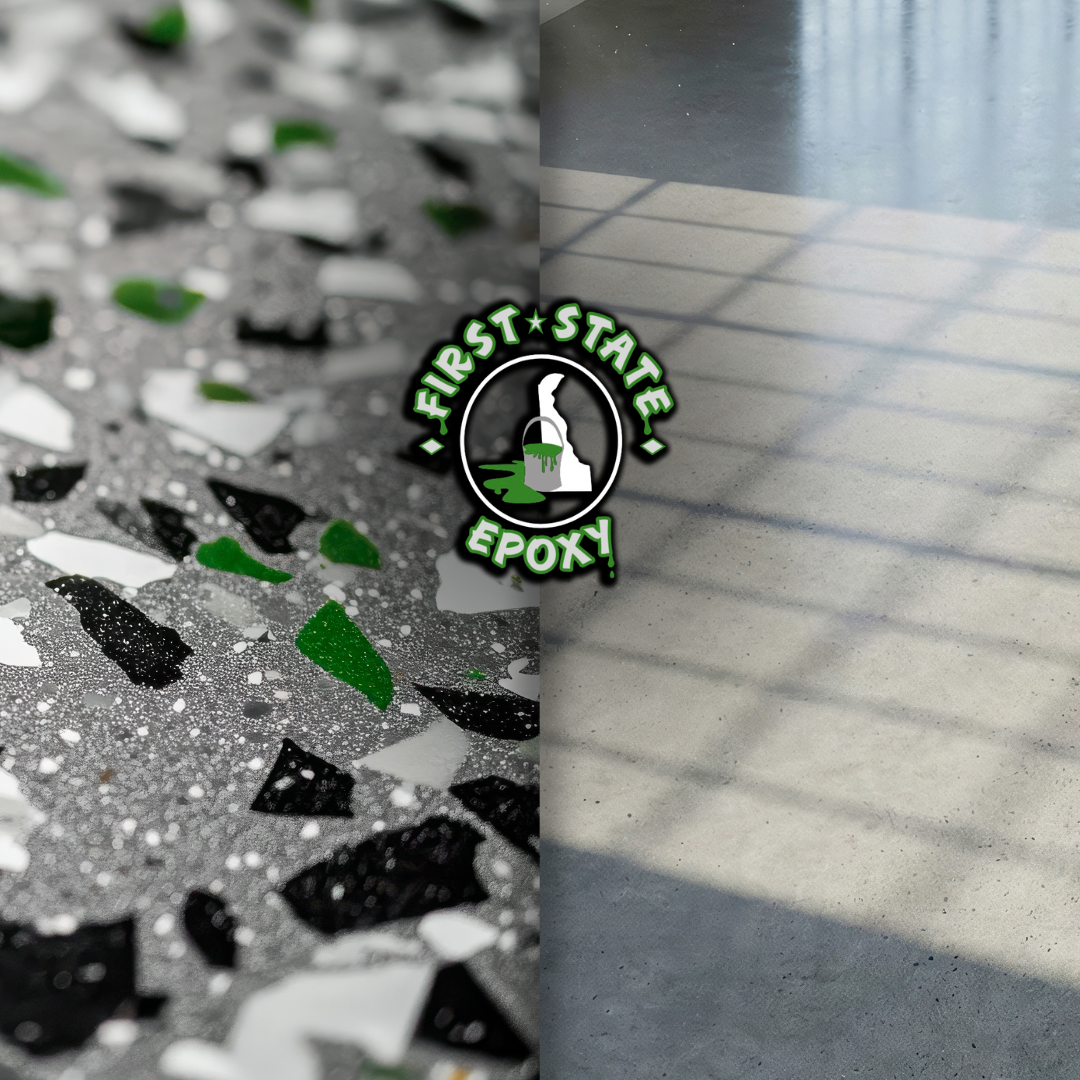
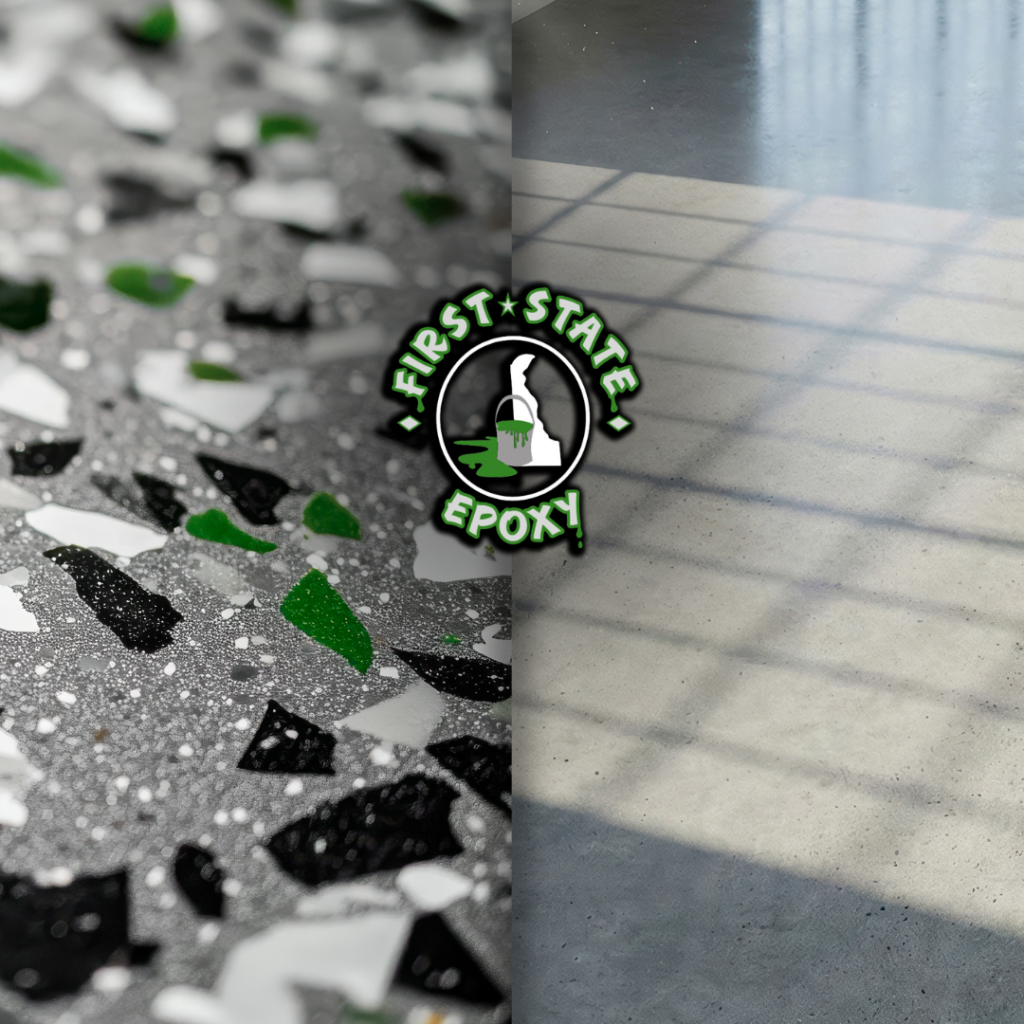
When choosing a commercial flooring solution, one of the most common questions Delaware business owners ask is: Tell me about polished concrete vs epoxy flooring?
Both options offer exceptional durability, modern aesthetics, and long-term value, but the right choice ultimately depends on your industry, operational needs, and daily foot traffic.
Whether you operate a restaurant, warehouse, dealership showroom, retail space, manufacturing facility, office building, or industrial property, selecting the proper flooring system can directly impact maintenance costs, safety, employee productivity, and your customers’ first impression.
At First State Epoxy, we help businesses throughout Delaware, Maryland’s Eastern Shore, and Southeastern Pennsylvania determine which flooring solution best fits their facility. Here’s what you need to know.
What Is Polished Concrete?
Polished concrete is an existing concrete slab that is mechanically ground, densified, and polished using specialized equipment to create a smooth, durable, and highly reflective surface.
Benefits of polished concrete include:
- Exceptional durability
- Minimal maintenance requirements
- Increased light reflectivity
- Lower lifetime ownership costs
- Modern, professional appearance
- No coatings that can peel or delaminate
- Excellent performance in large commercial environments
Polished concrete is especially popular in:
- Warehouses
- Distribution Centers
- Manufacturing Facilities
- Retail Stores
- Schools
- Office Buildings
- Large Commercial Spaces
What Is Epoxy Flooring?
Epoxy flooring is a seamless resin-based coating system applied directly over prepared concrete surfaces. Commercial epoxy systems create a protective barrier that is highly resistant to chemicals, impacts, abrasions, and moisture.
Benefits of epoxy flooring include:
- Seamless and easy-to-clean surface
- Chemical resistance
- Custom color options
- Decorative finishes available
- Enhanced safety with slip-resistant additives
- Moisture protection
- Professional appearance
Commercial epoxy is commonly installed in:
- Restaurants
- Commercial Kitchens
- Auto Dealerships
- Automotive Service Centers
- Medical Facilities
- Veterinary Clinics
- Breweries
- Laboratories
Polished Concrete vs Epoxy: Key Differences
Durability
Both systems are extremely durable when professionally installed.
Polished concrete excels in high-traffic environments where heavy equipment, forklifts, and continuous foot traffic are common.
Epoxy performs exceptionally well in environments requiring chemical resistance and enhanced surface protection.
Winner: Tie (depends on application)
Maintenance Requirements
Polished concrete requires routine dust mopping and occasional cleaning.
Epoxy flooring also requires minimal maintenance but may need periodic recoating over many years depending on usage.
Winner: Polished Concrete
Appearance
Polished concrete offers a modern, industrial, high-end aesthetic with natural variation.
Epoxy provides significantly more customization through colors, flakes, logos, and decorative finishes.
Winner: Epoxy
Safety
Both flooring systems can improve workplace safety.
Polished concrete improves visibility through light reflectivity, while epoxy systems can incorporate anti-slip additives for enhanced traction.
Winner: Tie
Moisture & Chemical Resistance
Epoxy flooring creates a sealed protective barrier that outperforms polished concrete in areas exposed to chemicals, oils, grease, and moisture.
Winner: Epoxy
Which Businesses Should Choose Polished Concrete?
Polished concrete is often ideal for:
Warehouses
Large square footage spaces benefit from lower maintenance costs and exceptional durability.
Distribution Centers
Smooth surfaces improve operational efficiency for forklifts and heavy equipment.
Retail Stores
Modern aesthetics paired with low operating costs make polished concrete attractive for retail environments.
Office Buildings
Professional appearance and easy maintenance support long-term value.
Manufacturing Facilities
Durable enough to handle demanding environments while remaining easy to clean.
Which Businesses Should Choose Epoxy Flooring?
Epoxy flooring is often ideal for:
Restaurants & Commercial Kitchens
Seamless surfaces help improve cleanliness and simplify maintenance.
Automotive Dealerships
Showrooms benefit from a polished, high-end appearance that enhances vehicle displays.
Automotive Service Centers
Chemical resistance helps protect floors from oil, fluids, and daily wear.
Medical Facilities
Easy-to-clean surfaces support sanitary environments.
Breweries & Food Processing Facilities
Durable surfaces stand up to demanding daily operations.
Why Delaware Businesses Choose First State Epoxy
Commercial flooring is an investment that directly impacts your business operations for years to come.
At First State Epoxy, we specialize in designing flooring systems tailored to each facility’s unique requirements. Our team works with businesses throughout Delaware to create flooring solutions that prioritize durability, aesthetics, safety, and long-term performance.
We proudly serve:
- Wilmington
- Newark
- Middletown
- Dover
- Smyrna
- Bear
- New Castle County
- Kent County
- Sussex County
Whether you’re renovating an existing facility or planning a new construction project, our team can help you determine the right flooring system for your business.
Frequently Asked Questions
Is polished concrete cheaper than epoxy flooring?
Generally, polished concrete can offer lower long-term ownership costs, especially in large commercial spaces. However, pricing depends on the condition of the existing concrete and project requirements.
How long do commercial epoxy floors last?
Professionally installed commercial epoxy systems can last 10-20 years or longer with proper maintenance.
Can polished concrete crack?
Concrete itself can naturally develop cracks over time. Existing cracks are typically repaired during the preparation process.
Which flooring is best for restaurants?
Epoxy flooring is often preferred due to its seamless surface, moisture resistance, and ease of cleaning.
Can First State Epoxy help determine the right solution?
Absolutely. Every facility is different, and we provide recommendations based on your industry, daily operations, and long-term goals.


No responses yet