

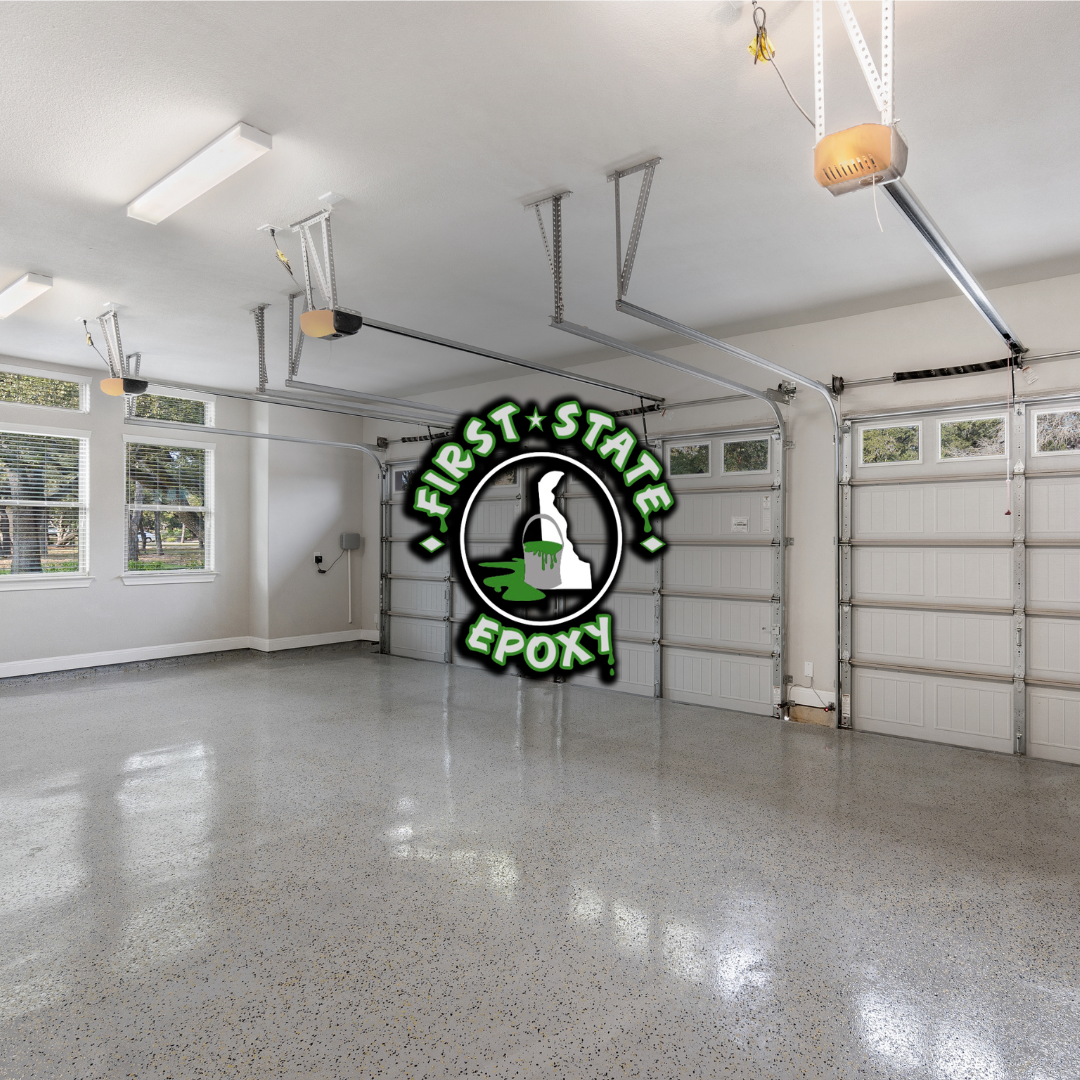
If you’re looking to upgrade a concrete garage floor, you’ve probably encountered a long list of options: epoxy, polyaspartic, polyurea, concrete paint, sealers and decorative flake systems. They can look similar in photos, but they aren’t necessarily the same product—or the same level of flooring system.
So, what is the best garage floor coating for a Delaware home?
For most homeowners, the answer depends on how the garage is used, the condition of the existing concrete and what matters most in the finished floor. Durability, UV stability, appearance, traction, installation time and resistance to everyday garage contaminants can all influence the right choice.
Just as important, a quality garage floor isn’t determined by the coating alone. Concrete preparation and installation are critical to long-term performance.
Understanding the major options can help Delaware homeowners make a more informed decision before investing in their garage.
What Should You Look for in a Garage Floor Coating?
A residential garage experiences conditions that many interior floors never encounter.
Vehicles introduce water, dirt and road contaminants. Tires repeatedly contact the same areas. Garages can experience temperature fluctuations, sunlight through an open garage door, automotive fluids, lawn equipment, tools and heavy storage.
A quality garage flooring system should be selected with these conditions in mind.
Important characteristics include:
- Strong adhesion to properly prepared concrete
- Resistance to abrasion and everyday wear
- Resistance to common automotive fluids and contaminants
- UV stability where sunlight exposure is a concern
- Easy routine cleaning
- Appropriate traction
- Attractive, consistent appearance
- Compatibility with the existing concrete
- Professional surface preparation
- Long-term serviceability
There isn’t one product that automatically wins every category. That’s why understanding the differences between the major garage flooring options matters.
Epoxy Garage Floor Coatings
Epoxy is one of the most recognized names in concrete flooring—and for good reason.
Professional epoxy products have been used in residential, commercial and industrial environments for decades. When properly specified and applied over prepared concrete, epoxy can provide excellent adhesion, durability and a substantial protective surface.
Advantages of epoxy can include:
- Strong bond to properly prepared concrete
- Good abrasion resistance
- Resistance to many common chemicals
- Decorative colors and flake options
- Smooth, professional appearance
- Proven use in demanding flooring environments
However, “epoxy” describes a broad category of products rather than one universal flooring system.
A professional-grade epoxy system and an inexpensive DIY kit sold as “garage floor epoxy” should not be assumed to provide identical performance.
Certain epoxy formulations can also discolor or amber with prolonged UV exposure, which is an important consideration in garages that receive substantial sunlight.
Polyaspartic Garage Floor Coatings
Polyaspartic technology has become a popular option for residential garage flooring.
These coatings are known for fast curing, abrasion resistance and strong UV stability. Polyaspartic products are also frequently used as durable topcoats in decorative flake flooring systems.
Potential advantages include:
- Excellent UV stability
- Strong abrasion resistance
- Chemical resistance
- Fast curing
- Decorative flake compatibility
- Durable clear finishes
- Easy-to-maintain surfaces
The faster curing characteristics can reduce installation time, but they also require an installer who understands the product’s working time and application requirements.
Polyaspartic isn’t automatically the best answer for every slab or every layer of a flooring system. The complete system design matters more than choosing a product based solely on its name.
What About Polyurea Garage Floor Coatings?
Polyurea is another resin technology commonly discussed in the garage flooring industry.
Depending on its formulation, polyurea can offer fast curing, flexibility and strong performance characteristics. It may be used as part of a multilayer garage floor system rather than as a standalone solution.
This is another reason homeowners should ask contractors exactly what they’re installing.
Terms such as epoxy, polyurea and polyaspartic are sometimes used broadly in advertising, but professional flooring systems may use different materials for the base coat and topcoat to take advantage of each product’s strengths.
Epoxy vs. Polyaspartic: Which Is Better for a Garage?
This is one of the most common questions homeowners encounter when researching garage flooring.
The answer isn’t as simple as declaring one material the winner.
Epoxy May Be a Strong Choice When:
- Excellent adhesion is important
- The flooring system is designed around an epoxy base
- A substantial build is desired
- The product will be protected by an appropriate topcoat
- The installer determines epoxy is appropriate for the slab and application
Polyaspartic May Be a Strong Choice When:
- UV stability is especially important
- Faster curing is beneficial
- Strong abrasion resistance is desired
- A durable clear topcoat is needed
- The garage receives significant sunlight
In many professional flooring systems, the best solution may incorporate more than one coating technology.
Instead of asking only, “Is epoxy or polyaspartic better?” homeowners should ask:
What complete flooring system is being installed, how will the concrete be prepared and why is that system appropriate for my garage?
Are DIY Garage Floor Epoxy Kits a Good Option?
DIY garage floor kits offer an inexpensive entry point for homeowners who primarily want to improve the appearance of unfinished concrete.
However, they shouldn’t automatically be considered equivalent to a professionally installed coating system.
Differences may include:
- Product solids and formulation
- Coating thickness
- Concrete preparation
- Crack and surface repairs
- Application equipment
- Decorative flake coverage
- Topcoat materials
- Installation conditions
One of the biggest differences is often surface preparation.
A coating can only perform as well as its bond to the concrete underneath it.
For homeowners seeking a long-term garage upgrade rather than a temporary cosmetic improvement, the preparation process deserves just as much attention as the coating itself.
Why Concrete Grinding Matters Before a Garage Floor Is Coated
Proper concrete preparation is one of the most important steps in a professional garage floor installation.
Concrete may contain contaminants, sealers, old coatings, surface imperfections or weak material that can interfere with adhesion.
Mechanical grinding removes surface material and creates a profile that allows the coating system to properly bond with the concrete.
During preparation, installers can also identify issues such as:
- Existing cracks
- Previous repairs
- Oil contamination
- Old coatings
- Surface deterioration
- Other concrete conditions requiring attention
Simply applying a high-quality coating over poorly prepared concrete does not create a high-quality floor.
The preparation underneath the finished surface is one of the biggest differences between a professional flooring system and a basic cosmetic coating.
What Is a Decorative Flake Garage Floor?
The decorative flake system is one of the most popular garage floor finishes for residential properties.
After a base coat is applied, decorative vinyl flakes are broadcast across the floor. Depending on the system, the flakes may provide partial or full coverage before being protected with a clear topcoat.
Homeowners can choose from different flake blends and colors to complement the garage and surrounding home.
Beyond appearance, flake systems can:
- Help disguise minor visual imperfections
- Add texture to the finished surface
- Create a consistent decorative appearance
- Offer substantial design flexibility
- Produce a finished, showroom-style garage
The final performance still depends on the coatings underneath and above the decorative flake layer.
Should a Garage Floor Coating Be Slip Resistant?
Traction is an important consideration for garage flooring, particularly when vehicles bring rain or snow into the garage.
Coating systems can be designed with different levels of texture or incorporate slip-resistant additives.
There is a balance to consider.
A highly textured surface can provide additional traction but may be more difficult to clean than a smoother floor. The appropriate texture depends on how the garage is used and the homeowner’s priorities.
Discussing traction before installation allows the flooring system to be designed accordingly.
How Delaware Weather Affects Garage Floors
Delaware garages experience changing conditions throughout the year.
Summer heat and sunlight, winter temperatures, rain, snow and road treatments can all find their way into a garage.
Vehicles may introduce:
- Water
- Road salt
- Deicing materials
- Dirt and sand
- Automotive fluids
- Other road contaminants
Garages with doors facing strong sunlight may also experience significant UV exposure near the entrance.
These conditions make chemical resistance, abrasion resistance and UV stability important considerations when choosing a garage flooring system in Delaware.
Can an Older Concrete Garage Floor Be Coated?
In many cases, yes.
An older garage slab doesn’t necessarily need to look perfect before a professional coating is considered.
Existing cracks, stains and previous coatings can often be addressed during preparation, although the concrete must first be evaluated to determine whether it is an appropriate candidate.
Potential concerns include:
- Cracks and movement
- Oil contamination
- Moisture
- Previous coatings or sealers
- Surface deterioration
- Prior repairs
Concrete is a dynamic material and can continue to move after a coating is installed. No flooring system can guarantee that future concrete movement will never occur.
A professional evaluation helps determine what preparation and repairs are appropriate before installation.
How to Choose a Garage Floor Coating Contractor in Delaware
When comparing garage flooring companies, homeowners shouldn’t compare estimates based on price alone.
Two proposals can describe a “garage floor coating” while specifying completely different preparation methods, materials and installation processes.
Consider asking:
- How will my concrete be prepared?
- Will the floor be mechanically ground?
- What coating products will be used?
- What is used for the base coat?
- What is used for the topcoat?
- How are existing cracks addressed?
- Is the finished system UV stable?
- What decorative options are available?
- Can texture or slip resistance be adjusted?
- What maintenance does the floor require?
- What warranty is provided?
A contractor should be able to explain what is being installed and why it makes sense for your particular garage.
What Is the Best Garage Floor Coating for Your Delaware Home?
For homeowners looking for a durable, attractive garage floor, there isn’t a single product name that determines the best solution.
A high-quality garage floor combines the right coating system, thorough concrete preparation, proper installation and a finish designed around how the garage will actually be used.
Epoxy, polyaspartic and polyurea technologies can all have a place in professional flooring systems. The important part is selecting the right combination for the concrete and environment rather than choosing based solely on a marketing label.
First State Epoxy installs professional garage floor coating systems for homeowners throughout Wilmington, Newark, New Castle, Bear, Hockessin, Middletown, Smyrna, Dover and communities across Delaware.
Frequently Asked Questions About Garage Floor Coatings
The best system depends on the concrete, sunlight exposure, garage use and desired finish. Professional systems may use epoxy, polyaspartic, polyurea or a combination of coating technologies to achieve different performance characteristics.
Neither is universally better. Polyaspartic offers excellent UV stability, abrasion resistance and fast curing, while professional epoxy can provide strong adhesion and durability. Some flooring systems use different technologies for different layers.
Professional systems typically differ in concrete preparation, coating materials, application methods and overall system design. Mechanical surface preparation is particularly important because proper adhesion begins with the condition of the concrete.
Many older garage floors can be coated after evaluation and proper preparation. Existing cracks, previous coatings, contamination or damaged areas may require additional work before the new flooring system is installed.
Upgrade Your Garage Floor with First State Epoxy
The best garage floor isn’t simply the coating with the most recognizable name. It starts with properly prepared concrete and a flooring system selected for the demands of your garage.
First State Epoxy provides professional garage floor coating solutions for homeowners throughout Delaware.
Whether you’re finishing a new garage, updating an older concrete floor or comparing coating options, contact First State Epoxy to schedule an estimate and explore the right flooring system for your home.



No responses yet